
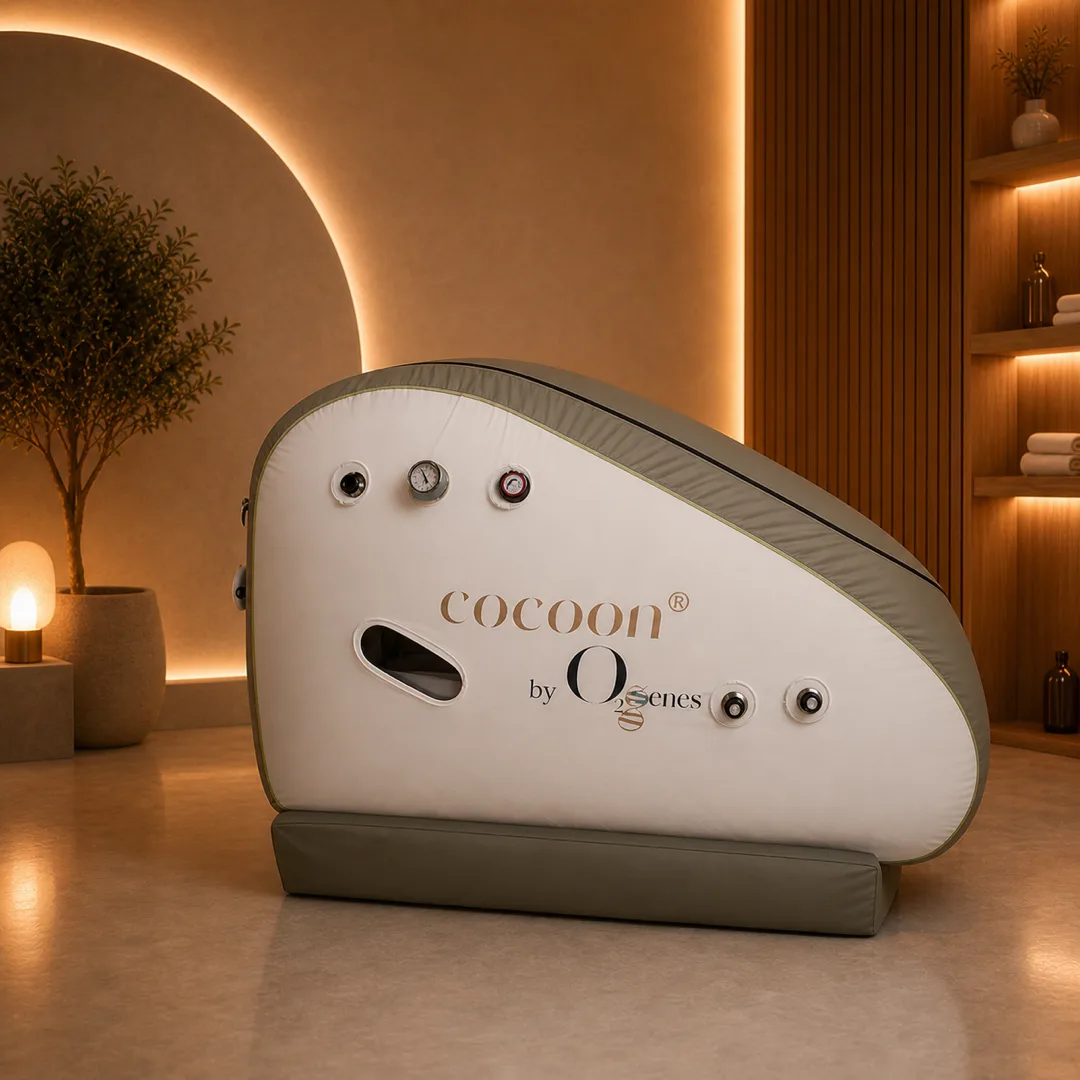
Flexible structure
Soft Shell HBOT cocoon®
Five one-person formats built around upright, reclined, lie-down or wheelchair-accessible positioning.
According to the UHMS, 1.4 ATA is the minimum therapeutic pressure. The Hard Shell HBOT cocoon® operates up to 1.99 ATA, with more oxygen dissolved in the plasma.
At 1.99 ATA, more oxygen is dissolved in the plasma, so it can diffuse further into body tissues. These columns compare other mild systems with HBOT cocoon® by O2genes. The Soft Shell HBOT cocoon® series is 1.4–1.5 ATA, in the specification table below.
| Comparison point | Mild HBOT up to 1.3 ATA1.3 ATA | Mild HBOT up to 1.5 ATA1.5 ATA | HBOT cocoon® by O2genes up to 1.99 ATAHBOT cocoon® 1.99 ATA |
|---|---|---|---|
| Alignment with published HBOT research | Below the minimum recommended atmospheric pressure by the UHMS. | Partial alignment with published HBOT research. | A pressure used in many published HBOT research protocols. |
| Oxygen delivery potential | Low | Moderate | High |
| Ability to reach deeper tissues | Limited | Moderate | Maximum |
| Therapy flexibility | Basic wellness sessions, capped at 1.3 ATA. | A wider range of wellness protocols. | The broadest range of evidence-informed HBOT protocols. |
| Long-term investment value | Limited by low atmospheric pressure. | A good balance, still limited by lower pressure. | The highest capability without upgrading equipment. |
| Scientific foundation | One-size-fits-all. | Generic operating recommendations. | Proprietary protocols developed by Dr. Josh (PhD) from peer-reviewed HBOT literature. |
| Progressive programming | A standard usage guide. | Limited ongoing support. | Protocols continuously refined by Dr. Josh (PhD). |
| Safety standards | Basic safety standards. | Basic safety standards. | Electrical safety and Air-Break™ Technology, similar to HBOT research standards. |
In this guide, O2genes uses Mild Hyperbaric Oxygen Therapy (mHBOT) for its Soft Shell HBOT cocoon® systems at 1.4–1.5 ATA and Hyperbaric Oxygen Therapy (HBOT) for its Hard Shell HBOT cocoon® systems up to 1.99 ATA. These are product-series labels here—not a claim that pressure alone determines clinical use or outcome.
ATA means atmospheres absolute: the total pressure inside the HBOT cocoon®. Sea-level pressure is about 1.0 ATA. Pressure is one specification. Oxygen delivery, session time, and the room also decide the fit.
Five one-person formats built around upright, reclined, lie-down or wheelchair-accessible positioning.
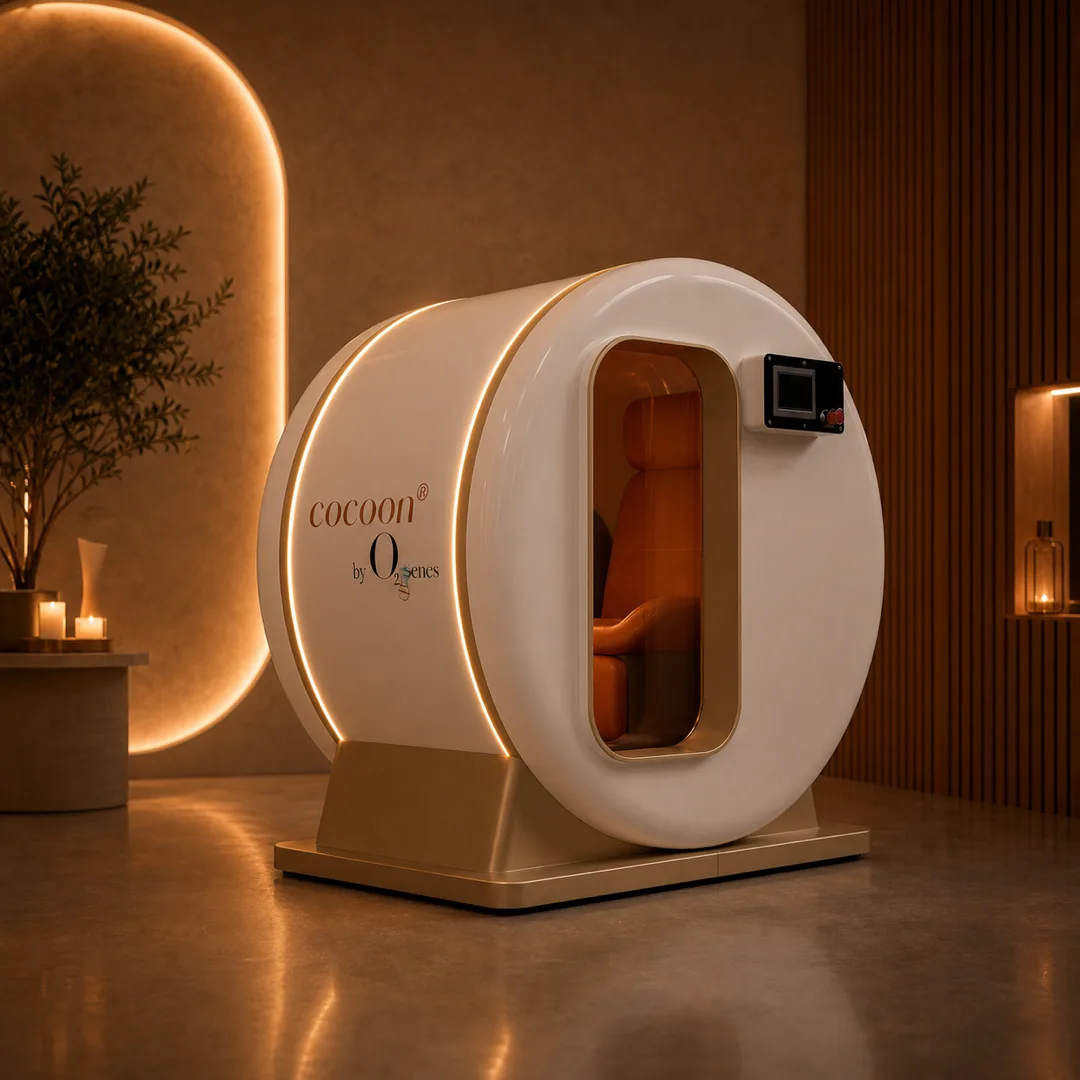
Four models across seated and horizontal formats, with one- to six-person configurations depending on model.
Specifications can change. Confirm the maximum pressure, included equipment and installation requirements in the current quotation for the chosen model.
| Comparison point | Soft Shell HBOT cocoon®Soft Shell | Hard Shell HBOT cocoon®Hard Shell |
|---|---|---|
| Maximum pressure up to | 1.5 ATA for Lumiere, Reverie, Zilsie and Roomiere; 1.4 ATA for Evexia. | Up to 1.99 ATA across Aura, Elixir, Altus and Zia. |
| Structure | TPU Soft Shell HBOT cocoon® supported by a stainless-steel frame. | Rigid Hard Shell HBOT cocoon® body with model-specific seating, viewing and control layouts. |
| Recommended capacity | One person across all five models; choose by posture, access and room footprint. | Aura: 1 person, with 2- and 4-person options; Elixir: 2; Altus: 4, with 2- and 6-person options; Zia: 1. |
| Oxygen delivery | Product-specific concentrator and breathing setup. Confirm it from the supplied oxygen system and breathing setup, not from ATA alone. | Model-specific oxygen system and controls. Confirm the complete supplied configuration. |
| Space planning | Plan for the inflated Soft Shell HBOT cocoon®, frame, equipment, ventilation, clearance and dedicated power. | Plan as a room installation, including access, equipment, ventilation, clearance and dedicated power. |
| Support | Model selection, setup guidance, training, maintenance and local support. | Site planning, delivery coordination, installation, training, maintenance and local support. |
Pressure, oxygen concentration, and exposure time all matter. Multiplying them into a simple score is not a reliable way to treat two devices or session plans as the same. Compare delivery, protocol steps, and the evidence behind each pathway.
Oxygen inside the HBOT cocoon® and the oxygen a person breathes may not be the same.
Compression, decompression, air breaks, frequency and total sessions can change the exposure.
Match a study result to the HBOT cocoon®, oxygen delivery, and protocol that produced it before comparing systems.
Is the goal a wellness experience, a product purchase, or a medical question?
Which posture, access needs and recommended capacity fit the intended user?
What pressure, oxygen delivery and operating protocol does the exact model use?
Can the room support the required footprint, access, power, ventilation and equipment?
Who will operate, maintain and supervise the system—and who will assess medical suitability?
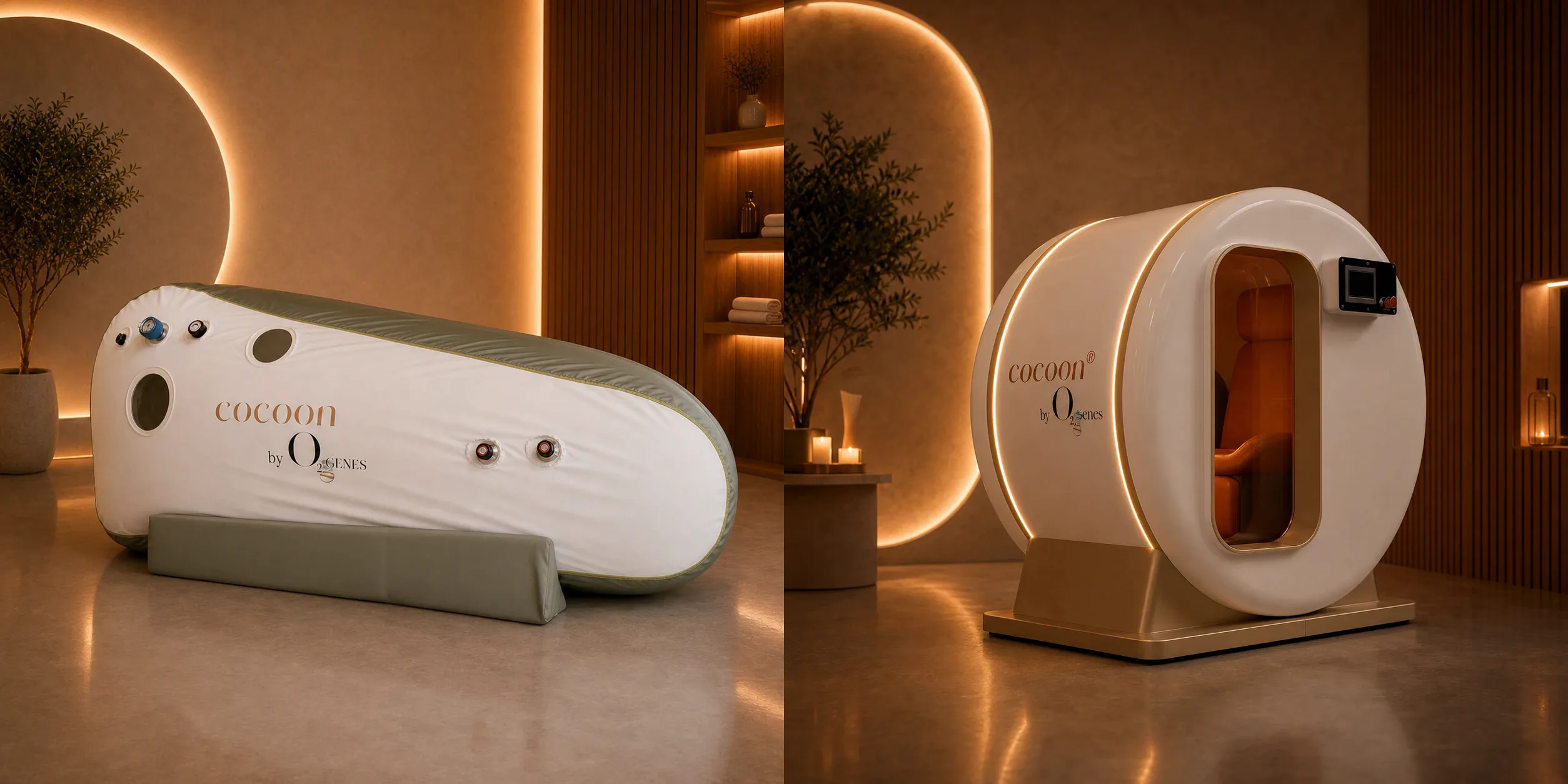
Review each series’ models, recommended capacity, dimensions, pressure and support before asking for a quotation.