
Blog / HBOT
8 Critical Safety Features to Look for When Buying a Hyperbaric Oxygen Chamber
When shopping for a hyperbaric oxygen chamber, buyers are often inundated with technical jargon, maximum pressure claims, and striking price differences. While luxury finishes and attractive price tags naturally catch the eye, one engineering reality must guide your decision: a hyperbaric chamber is a pressurized vessel operating with concentrated oxygen.
Whether operating at 1.4 ATA or 1.99 ATA, a hyperbaric oxygen chamber fundamentally alters the barometric and atmospheric environment around the body. That is why safety engineering, mechanical redundancies, fire safety thresholds, verified pressure testing, electrical isolation, and emergency egress, should be the first thing you verify, before price or aesthetics.
Under the professional safety governance of Founder Dr. Josh (PhD) (certified Hyperbaric Safety Director through International ATMO and the Undersea and Hyperbaric Medical Society [UHMS], and trained under the Singapore Hyperbaric and Underwater Medicine Course [SHUMEC]), O2genes adheres to stringent international hyperbaric engineering standards.
Since 2017, our engineering team has installed HBOT cocoon® systems across Singapore, Indonesia, the Philippines, Vietnam, Thailand, Malaysia, Hong Kong and South Africa.
Master Safety Reference Note: This article is the detailed safety engineering deep-dive for O2genes. Our other guides, including our Singapore Home Buyer's Guide and Hard-Shell vs. Soft-Shell Guide.
Here are the 8 safety features you should verify before investing in any hyperbaric chamber for your home or wellness clinic.
1. Verified Pressure Integrity: Hydrostatic & Pneumatic Pressure Testing
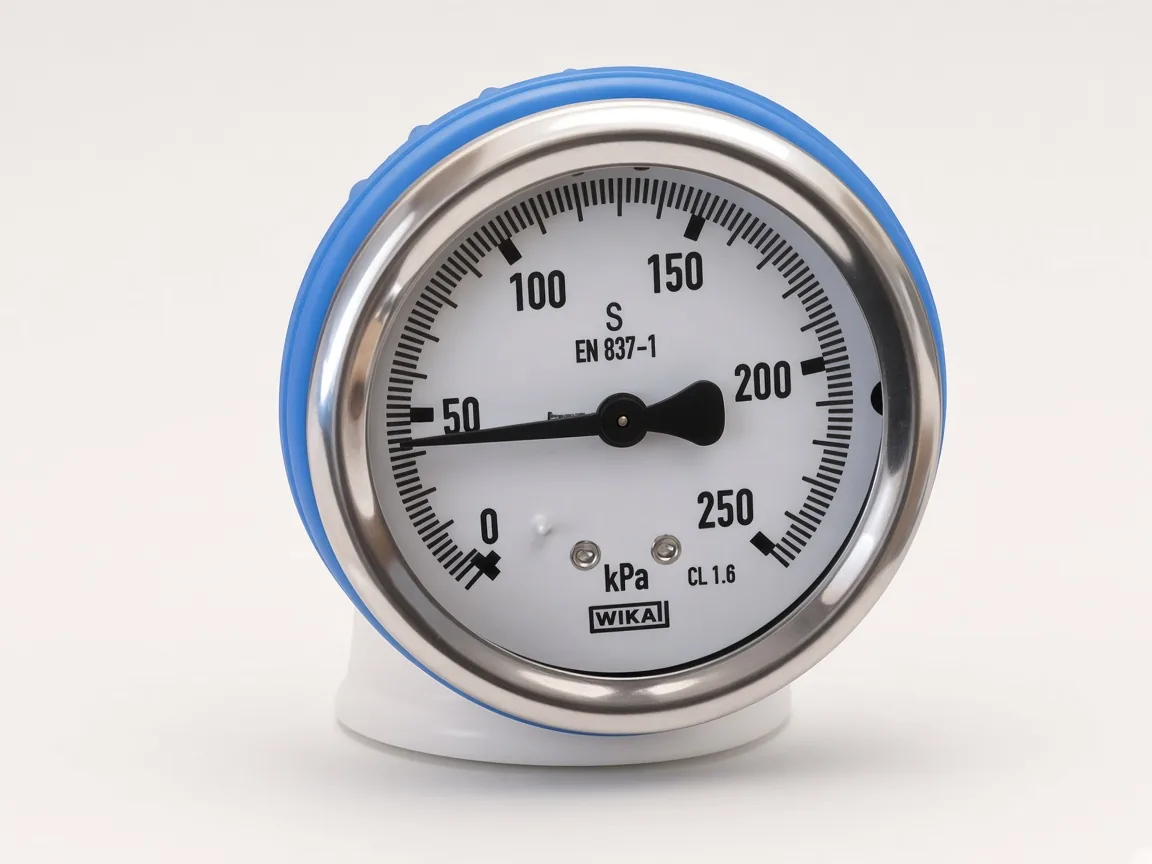
TLDR Summary: Never purchase a chamber based solely on factory self-declarations. O2genes Hard Shell HBOT cocoons undergo 1.3× hydrostatic pressure testing certified by third-party bodies such as TÜV SÜD. For Soft Shell HBOT cocoons, random batch burst pressure testing certifies pressure tolerance up to 1.8 ATA, backed by dual relief valves and an emergency relief valve set 0.1 ATA above operating pressure.
In pressure vessel engineering, structural limits must be empirically proven before equipment enters a residential or commercial setting:
How O2genes tests pressure limits
Every O2genes HBOT cocoon® is tested against its working pressure before it reaches you. The method depends on the type of HBOT chamber.
| Hard Shell HBOT cocoon® (up to 1.99 ATA) | Soft Shell HBOT cocoon® (1.4–1.5 ATA) | |
|---|---|---|
| Test method | 1.3× operating pressure with hydrostatic pressure test | Destructive pneumatic test on every manufacturing batch, chosen at random |
| Test level | Up to 2.59 ATA hydrostatic pressure | Verified on randomly selected production batches, up to 1.8 ATA pneumatic pressure |
| Verification | Certified by TÜV SÜD or another third party authorised inspector | Two safety relief valves set at cocoon operating pressure |
| Structure and backup | Two safety relief valves are set to fully open and release pressure at 0.2 ATA higher than operating pressure. | An emergency relief valve set 0.1 ATA higher than operating pressure |
For our Hard Shell HBOT cocoons, the structural margin is deliberately engineered:
- The HBOT cocoon® operates comfortably at 1.99 ATA.
- Two independent mechanical relief valves regulate normal operating pressure.
- These relief valves are calibrated to open at 0.2 ATA above operating pressure (eg., venting at 2.2 ATA).
- Hydrostatic pressure testing for our HBOT cocoons up to 1.3x its operating pressure. This was verified by third party authorised inspectors and auditors such as TÜV SÜD to be able to withstand at least 2.59 ATA in water pressure, achieving ASME U-1 Pressure Vessel standards.
For our Soft Shell HBOT cocoons, the structural margin is deliberately engineered:
- The Soft Shell HBOT cocoon® operates comfortably at 1.4 ATA to 1.5 ATA.
- Two independent mechanical relief valves regulate normal operating pressure.
- A secondary emergency relief valve is calibrated to open at 0.1 ATA above operating pressure (e.g., venting at 1.6 ATA).
- The physical burst limit of the HBOT cocoon® material is verified at 1.8 ATA, providing a safety cushion of at least 0.2 ATA above the emergency valve.
2. In-Cabin Oxygen Monitoring with Automated Concentrator Cut-Off (<23.5%)
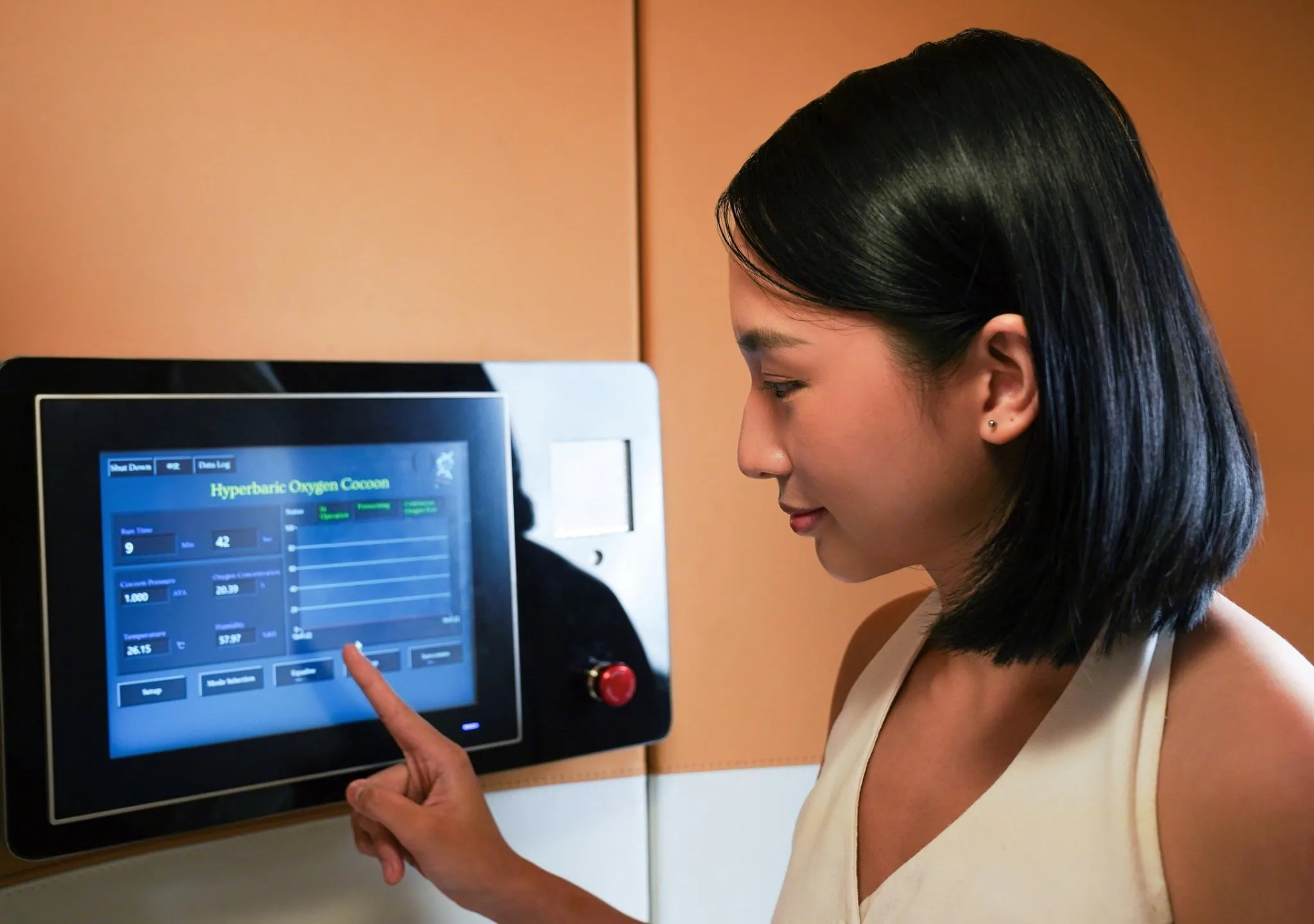
TLDR Summary: Ambient room air contains ~21% oxygen. To prevent fire risks, international hyperbaric standards (NFPA 99) require that ambient cabin oxygen must never exceed 23.5%. O2genes equipment continuously samples return air; if cabin oxygen exceeds 23.5%, the oxygen concentrator halts automatically while air circulation dilutes the atmosphere back to safe levels.
This is a vital fire safety principle: oxygen vigorously accelerates combustion. If oxygen leaks from masks into an enclosed cabin and exceeds 23.5%, everyday fabrics, hair, and plastics become significantly easier to ignite.
The O2genes Active Oxygen Safety Loop
- Continuous Return-Air Sampling: O2genes main control consoles continuously draw and sample exhaust air returning from inside the HBOT cocoon®.
- Automated Safety Cut-Off: If the cabin oxygen concentration rises above 23.5%, the system triggers an automatic safety override:
- The oxygen concentrator immediately halts oxygen output.
- The compressor continues circulating fresh ambient air into the HBOT cocoon®.
- The cabin atmosphere is actively diluted back down to safe baseline levels.
- Once stabilized below 23.5%, the oxygen concentrator automatically resumes operations.
- Isolated Mask Breathing: High-purity oxygen (93%–96%) is delivered directly to your airways via sealed masks or headsets, never loosely pumped into the open cabin.
3. Strict Spark Prevention: Direct Current (DC) & Grounded Internal Devices Mandate

TLDR Summary: Consumer electronics running on alternating current (AC) or powered by lithium-ion batteries represent unacceptable thermal runaway and spark hazards inside a pressurized, oxygen-rich environment. O2genes HBOT cocoons strictly prohibit personal consumer electronics inside the chamber. Any internal monitoring, lighting, and communication devices fitted by O2genes run strictly on low-voltage Direct Current (DC) and are fully grounded to eliminate static and spark risks.
Electrical safety inside a hyperbaric environment requires strict elimination of ignition sources:
Spark prevention and electrical isolation
Oxygen-enriched air makes materials ignite more easily, so the O2genes HBOT cocoon® is designed to prevent sparks and static. Some items should stay outside the chamber, and the O2genes HBOT cocoon® itself is built to remove the usual ignition sources.
| Please keep these out of the O2genes HBOT cocoon® | How the O2genes HBOT cocoon® is engineered |
|---|---|
| Personal smartphones and laptops | Low-voltage direct current (DC) only |
| Lithium-ion power banks and wearables | No high-voltage AC power inside the cabin |
| Electric heating pads and blankets | A dedicated grounding circuit to earth with optional grounding mat accessory |
| Alcoholic wipes, petroleum based hair products or perfume | Water-based wipes, ozone disinfection |
| Synthetic fabrics that build up static | Optional attachable grounding wrist band |
Wear cotton or other natural fabrics, and follow the session instructions from the O2genes team.
O2genes Direct Current (DC) Systems & Grounding Mechanism
- No Alternating Current (AC) in Cabin: High-voltage AC wiring is entirely excluded from the pressurized cabin space.
- Low-Voltage DC Internal Systems: Any reading lights, intercommunication microphones, or internal sensor displays provided within O2genes HBOT cocoons operate exclusively on low-voltage direct current (DC).
- Dedicated Earth Grounding Circuit: Every structural metal component, zipper frame, and internal DC device is bonded to a dedicated grounding mechanism connected directly to building earth. This actively dissipates triboelectric static charges before any spark can form.
- Optional Grounding Mat Accessory: For added static dissipation, a grounding mat can be added to your O2genes HBOT cocoon® upon request. Speak with our team to include it in your setup.
4. Air-Break Technology & Oxygen Toxicity Safety

TLDR Summary: Continuous high-concentration oxygen exposure can cause olfactory fatigue or blunt adaptive signaling. O2genes incorporates programmable Air-Break Technology, cycling between 20 minutes of oxygen delivery and 5 minutes of ambient air rest.
In hyperbaric science, the body responds dynamically to fluctuations in oxygen saturation. Widely used in established hyperbaric protocols, Air-Breaks provide two major advantages:
- Stimulating the Hyperoxic–Hypoxic Paradox: The controlled fluctuation between high oxygen levels and brief ambient room air breaks stimulates cellular signaling, mitochondrial adaptation, and stem cell release (Hadanny & Efrati, 2020).
- Enhanced Tolerance: Helps prevent upper airway dryness and supports pulmonary comfort during extended 60- to 90-minute sessions.
O2genes consoles allow users to program automated cycles, such as 20 minutes of oxygen flow followed by a 5-minute ambient air break, at the push of a button.
5. Certified Hyperbaric Safety Director Governance & Routine Emergency Egress Drills
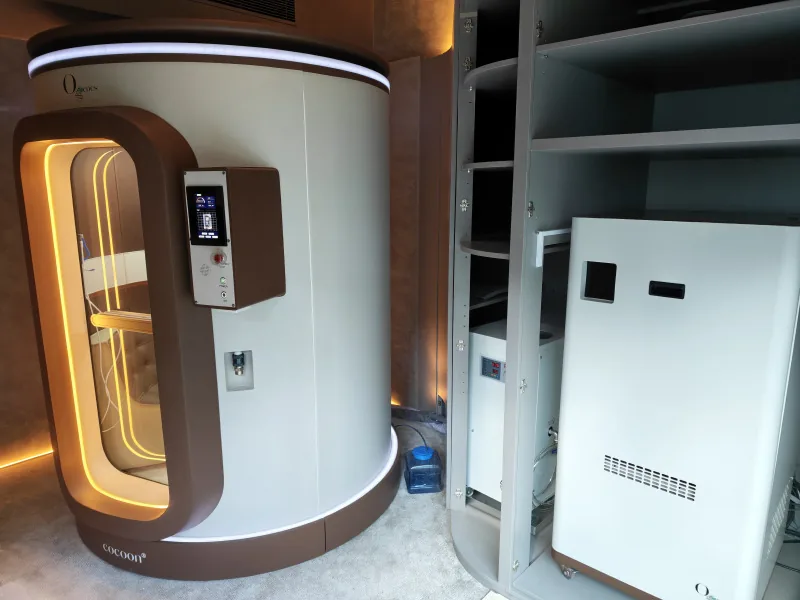
TLDR Summary: Equipment engineering is only as good as the operational governance behind it. O2genes Founder Dr. Josh (PhD) is a certified Hyperbaric Safety Director through International ATMO and the UHMS. This qualification ensures our chambers are engineered to recognize international safety standards, operational SOPs are consistently enforced, and emergency egress procedures are routinely rehearsed.
In established hyperbaric facilities, oversight by a certified Hyperbaric Safety Director is standard practice. When comparing wellness suppliers, it is worth asking who is responsible for safety governance and what qualifications they hold.
At O2genes, every aspect of chamber engineering, site installation, and operational training is governed by Dr. Josh (PhD):
- Chamber Build Oversight: Validating that pressure vessels, relief valves, electrical isolation circuits, and compressors adhere to international safety codes (such as ASME U-1 PV and NFPA 99 guidelines).
- Standard Operating Procedures (SOPs): Establishing clear checklists for home owners and clinic operators covering suitability screening, cabin atmosphere checks, and pre-session protocols.
- Routine Emergency Egress Drills: O2genes conducts emergency egress rehearsals with all home owners during initial white-glove onboarding, and provides bi-annual emergency drill training for our commercial clinic partners.
6. Sub-2-Minute Emergency Egress (Internal & External Dual Release)
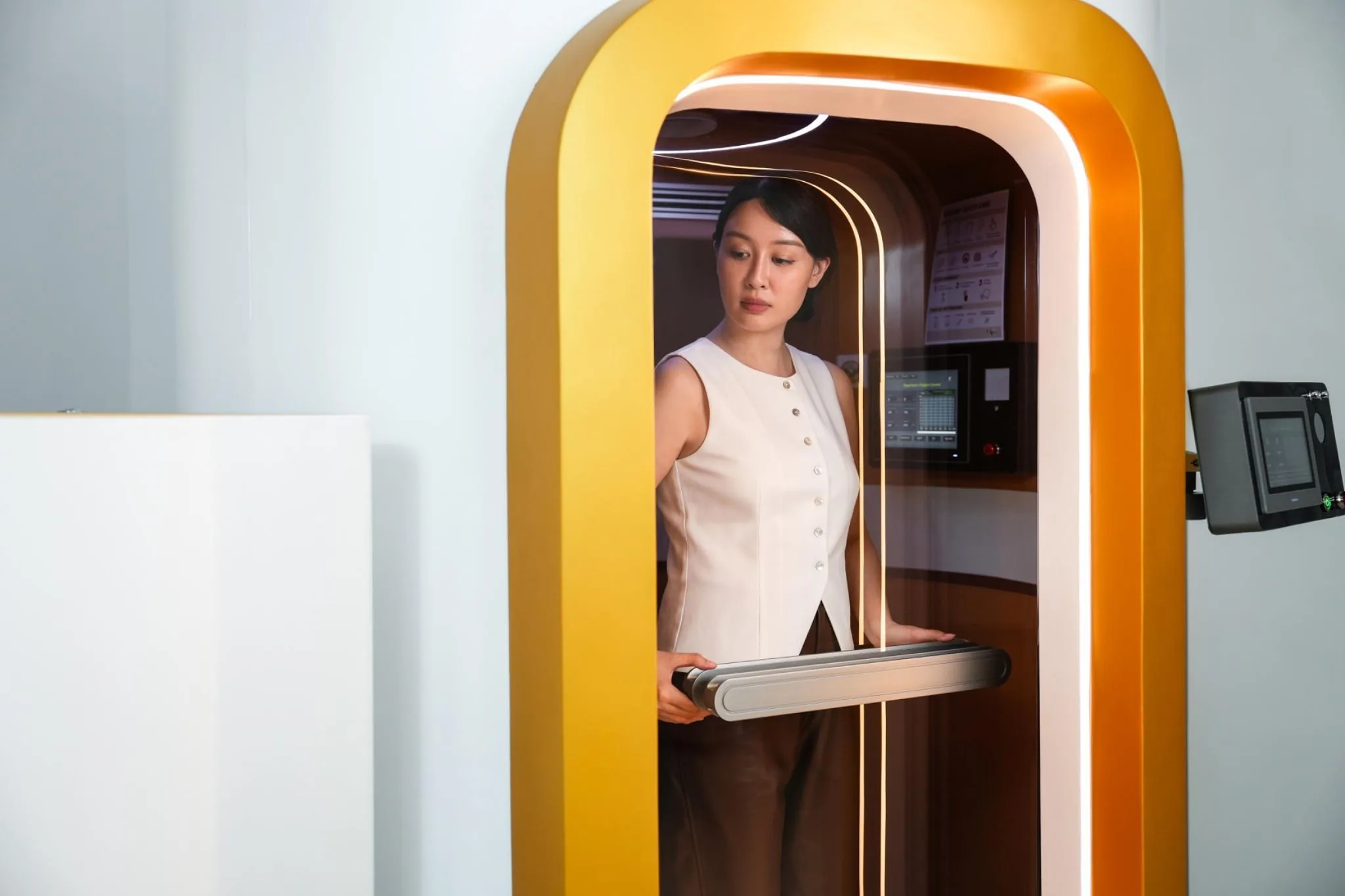
Watch the emergency egress video
TLDR Summary: In the event of anxiety, ear discomfort, or an urgent need to exit, the chamber must decompress smoothly and completely in under 120 seconds. Crucially, the occupant inside must have an internal manual mechanical release to exit independently without outside assistance.
Anxiety or claustrophobia can arise suddenly, particularly for first-time users. Safe engineering demands a dual-egress architecture:
- One-Touch Electronic Dump Switch: Smoothly releases pressure in 90 to 120 seconds while maintaining safe airflow dynamics.
- Internal Manual Mechanical Relief Valve: A physical turning knob or pull-lever inside the cabin that exhausts air immediately without electrical power. The user inside must never feel locked in or dependent on someone outside the chamber to let them out.
7. Automatic Fail-Safe Decompression During Power Trips
TLDR Summary: If an electrical trip, short circuit, or building blackout occurs in your Singapore home, an O2genes HBOT cocoon® automatically defaults to an open decompression state, venting back to 1.0 ATA so occupants can exit immediately.
In tropical Singapore, residential power trips from lightning storms or overloaded circuits occasionally happen.
O2genes HBOT cocoons feature an automatic fail-safe decompression circuit:
- The main pneumatic exhaust mechanism requires continuous power to remain closed.
- Upon any electrical interruption or blackout, the exhaust solenoid naturally drops open.
- The O2genes HBOT cocoon® smoothly and quietly depressurizes back to atmospheric room pressure (1.0 ATA) within 2 minutes, allowing the user to unfasten the closure and step out safely.
8. Professional Service & Maintenance by the O2genes Engineering Team

TLDR Summary: A hyperbaric chamber is a pressure system, so its safety depends on how well it is maintained after installation. O2genes HBOT cocoon® systems are installed, inspected, serviced and maintained by our professional engineering team, so the safety features described above keep working as designed throughout the life of the chamber.
Even the best-engineered chamber is only as safe as its upkeep. Seals, relief valves, oxygen sensors, compressors and concentrators all wear over time, and a safety feature that is not regularly checked cannot be relied on. This is why the question to ask any hyperbaric chamber supplier is not only "how is it built?" but also "who looks after it once it is in my home or clinic?"
The O2genes Service & Maintenance Approach
- Professional Installation: Our engineering team installs and commissions each HBOT cocoon® on site, and has completed installations in Singapore, Indonesia, the Philippines, Vietnam, Thailand, Malaysia, Hong Kong and South Africa since 2017.
- Scheduled Inspection & Servicing: Our engineers regularly inspect the critical safety components, including the pressure relief valves, oxygen sensors and automatic cut-off, the concentrator and compressor, and the shell and seals.
- Local Support & Training: Our local team provides ongoing support and in-person training, so you know how to operate the HBOT cocoon® with confidence.
Buyer Safety Checklist: Questions to Ask Hyperbaric Chamber Brands
Before signing any purchase of hyperbaric chambers or rental contract in Singapore, ask the supplier these questions:
| Safety feature | Question to ask | O2genes engineering standard |
|---|---|---|
| 1. Verified Pressure Integrity | Is pressure testing independently verified? | 1.3× hydrostatic test (TÜV SÜD) / burst test to 1.8 ATA; two independent mechanical relief valves |
| 2. In-Cabin Oxygen Limit | Is cabin oxygen monitored and capped? | Strictly < 23.5% with automated concentrator cut-off |
| 3. Spark Prevention | Which electronics are allowed inside? | Zero AC electronics or battery devices; grounded low-voltage DC devices only; optional grounding mat |
| 4. Air-Break Technology | Are oxygen/air cycles programmable? | Automated 20-min O2 / 5-min air break cycles |
| 5. Safety Governance | Who certifies and oversees safety? | Founder Dr. Josh (PhD), certified ATMO/UHMS Hyperbaric Safety Director; onboarding and bi-annual clinic drills |
| 6. Emergency Egress | Can the occupant release pressure from inside? | Internal manual mechanical release + one-touch dump; < 2 mins |
| 7. Power Trip Protection | What happens during a blackout? | Automatic fail-safe decompression (< 2 mins) |
| 8. Service & Maintenance | Who services and maintains the chamber after purchase? | Scheduled servicing and maintenance by our professional engineering team |
Connect with O2genes: Safety You Can Verify
At O2genes, safety is never an afterthought. It is the foundation of our engineering. Under the leadership of Founder Dr. Josh (PhD) (certified Hyperbaric Safety Director through International ATMO and the UHMS), every O2genes HBOT cocoon® is delivered, installed, and calibrated by our own engineering team.
Inspect Our Engineering in Person
We invite you to visit our Singapore showroom to test our safety valves and see our fail-safe mechanisms in operation:
- WhatsApp Us Directly: Message our wellness advisors on WhatsApp at +65 8802 9507 for technical specifications, TÜV proof test reports, and spatial advice.
- Visit Our Singapore Showroom: O2genes Showroom: 10 Ubi Crescent, Lobby A, #06-05, Singapore 408564
- Website & Direct Inquiry: Explore O2genes Safety Engineering
Referenced Scientific Studies & Standards
- NFPA 99 (2021). Health Care Facilities Code (Chapter 14: Hyperbaric Facilities). National Fire Protection Association.
- Hadanny, A., & Efrati, S. (2020). The hyperoxic-hypoxic paradox. Biomolecules, 10(6), 958.
- UHMS Guidelines (2020). Hyperbaric Oxygen Therapy Indications and Safety Guidelines (14th Ed.). Undersea and Hyperbaric Medical Society.
Take Your Next Step Experience O2genes HBOT cocoon®
WhatsApp +65 8802 9507 for rental availability and spatial advice, or visit the showroom at 10 Ubi Crescent, Lobby A, #06-05, Singapore 408564.